
· by Michael Blair, Nashville's Cabinets
Storage volume is not the same as usable storage. A deep shelf and a blind corner both hold a great deal and give access to almost none of it. When we plan custom cabinets, the fittings inside the boxes get as much of the drawing time as the doors on the front.
Why do drawers beat doors below the countertop?
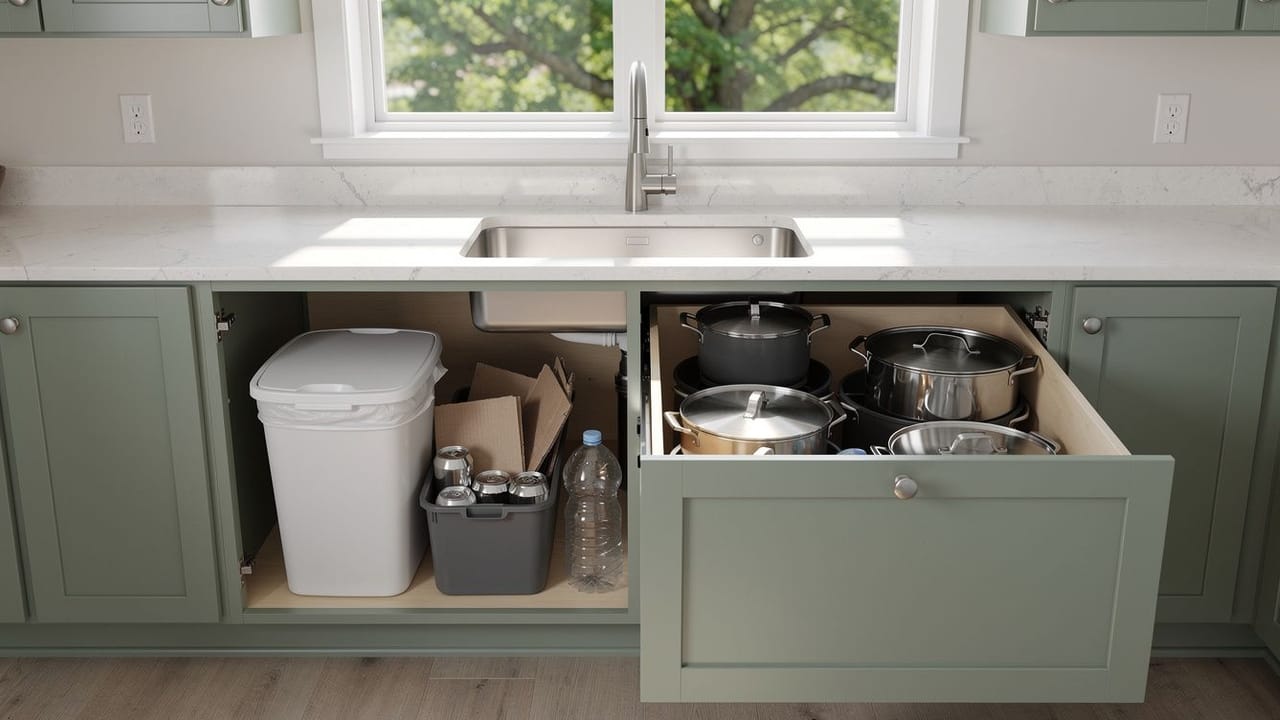
Base cabinets with doors and a fixed shelf require kneeling and reaching. The same volume as deep drawers is entirely visible and reachable when pulled out, as long as the runners are full extension, which our post on the cabinet hardware worth paying for explains.
A drawer base carries more hardware than a door base, so ask for both on the quote and compare. If the budget will not cover drawers everywhere, we put them in the cabinets on either side of the range and the sink first, because those get opened most.
Why is a blind corner cabinet so hard to use?
A blind corner cabinet is often the hardest space in a kitchen to get at. Pull-out corner systems and rotating carousels both bring more of it within reach, though how much depends on the unit and the size of the opening, and both add to the price.
The alternative is designing the corner out — a diagonal cabinet, or accepting a dead corner and keeping things in it you take out once a year. If you are keeping the cabinets you have, pull-outs can be retrofitted into them through our hardware and interior storage service, and we measure the corner opening before we promise one will fit.
- Deep drawers rather than doors in base cabinets
- A pull-out or carousel in any blind corner
- Vertical dividers for trays and boards
- A pull-out with room for trash and loose recycling near the sink
- Drawer inserts sized to what you own, not generic
Above and below
Wall cabinets taken to the ceiling remove the dust shelf and add real storage, at the cost of needing steps for the top shelf. That top row suits seasonal items.
Toe-kick drawers use the few inches under the base cabinets, and in our kitchens they earn their place holding flat things like baking sheets and serving trays.
Plan the bin first
Where the bin goes is decided by the plumbing and by where you prepare food, and in a lot of kitchens it gets settled last. We place the pull-out bin near the sink and the main prep area before the rest of the base run is laid out.
What it has to hold depends on Metro’s rules. Inside Nashville’s Urban Services District, paper, cardboard, cans and plastic bottles, jars and jugs all go into the same curbside cart, and Metro’s Recycle Right guidelines say to put them in loose, never in a plastic bag, and the EPA’s recycling guidance adds that plastic bags themselves cannot go in a household recycling bin. Glass is the exception: it is not accepted in curbside carts and goes to a recycling drop-off site instead.
So a bin cabinet here works best with a lined container for trash, an unlined one for recycling that you can carry out and tip into the cart, and a spot for glass if your household takes it to drop-off. Metro’s curbside collection page adds that trash is picked up weekly and recycling every other week, and that homes in the General Services District and multi-family complexes use a private hauler, so check with yours if you live outside the Urban Services District. Tell us how your household sorts when you ask us for an estimate, and we will size the pull-out to match.
Sources
- Metro Nashville Department of Waste Services, Recycle Right — What goes in the curbside recycling cart; items placed loose, not bagged; no glass in curbside carts, drop-off sites only; curbside eligibility in the Urban Services District
- U.S. Environmental Protection Agency, How Do I Recycle Common Recyclables — Plastic bags and wraps are recyclable but cannot go in a household recycling bin
- Metro Nashville Department of Waste Services, Curbside Trash and Recycling Services — Trash collected weekly and recycling every other week; trash bagged, recycling not; General Services District and multi-family homes use a private hauler
FAQ
Cabinet Interiors That Actually Get Used — questions
Are deep drawers better than base cabinets with doors?
For everyday use, in our experience, yes. A drawer brings the contents out to you and everything is visible; a base cabinet with a shelf requires kneeling and reaching into a dark space. Each drawer needs its own box and pair of runners, so price both layouts before deciding where the drawers go.
What is the best solution for a blind corner?
A purpose-made pull-out system that swings the front section out and slides the rear forward brings much more of the corner within reach than a fixed shelf, and rotating carousels suit true L-shaped corners. How much space either one gives back depends on the unit and the opening, and both add cost. The other legitimate answer is designing the blind corner out of the layout entirely.
Should wall cabinets go to the ceiling?
It removes the dust-collecting shelf above and adds meaningful storage, at the cost of needing steps for the top shelf. It suits things used a few times a year. In a room with tall ceilings, running cabinets to the ceiling can look imposing, so it is worth seeing the elevation drawn.
What should you store in high kitchen cabinets?
Things used a few times a year belong there. Running wall cabinets to the ceiling removes the dusty shelf on top and adds real storage, but the top row then needs steps to reach, which makes it the right place for seasonal items. Everyday dishes belong lower, and pots and pans do better in deep full-extension drawers.